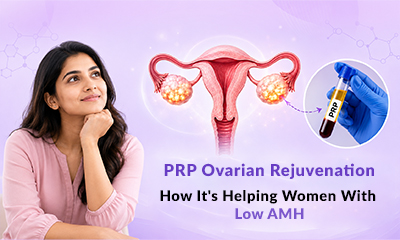
Getting an AMH report with a low number can feel like a door closing. But many women in Chennai are now learning about a treatment option that’s giving them a reason to try one more time — PRP Ovarian Rejuvenation for the ovaries.
Understanding PRP ovarian Rejuvenation
PRP, or Platelet-Rich Plasma, is created from your own blood. A small quantity of blood is drawn and processed in a centrifuge, which separates the plasma rich in platelets from the rest of the blood components.
This plasma is loaded with growth factors — proteins that play a role in tissue repair and cell activity. When injected into the ovarian tissue, these growth factors are believed to support follicle activity and potentially help previously inactive follicles begin developing again.
It’s worth being upfront here: this is still considered an emerging area in reproductive medicine. Research is ongoing, and results differ from patient to patient. That said, for women who have limited options otherwise, it’s a treatment worth understanding fully.
When Might a Doctor Suggest This Treatment?
Not every fertility case calls for PRP. It’s typically discussed for women who show signs such as:
- A low AMH result, often under 1.2 to 1.5 ng/ml
- Fewer antral follicles than expected for their age, seen on scan
- A history of cancelled or poor-response IVF cycles due to low egg yield
- Early signs of declining ovarian function, sometimes called diminished ovarian reserve
- Women who want to make one more attempt with their own eggs before considering donor eggs
A thorough hormonal work-up, along with a detailed ultrasound of both ovaries, helps the fertility team decide if this approach fits your case.
Step-by-Step: What Happens During the Procedure
Patients are often curious about what actually happens in the procedure room. Here’s a simple breakdown:
- Sample collection – Blood is drawn from your arm, much like a standard lab test, usually a small vial’s worth up to around 60 ml.
- Processing – The sample is spun in a centrifuge at specific speeds for a set number of minutes to isolate the platelet-rich layer.
- Ovarian assessment – Before injecting anything, the ovaries are examined using ultrasound with colour Doppler to check size, follicle count, and blood supply.
- Guided injection – Through the vaginal route, a fine needle delivers the PRP into the outer layer of the ovary (the cortex), where the follicles live. The doctor adjusts the needle angle to spread the injection across different areas, so the treatment isn’t limited to one spot.
- Observation and discharge – You’re monitored briefly after the procedure and can usually go home the same day.
The whole process is done under sedation or light anesthesia and generally wraps up within 30 to 45 minutes.
What Happens After the Procedure?
Patience matters here. Ovarian tissue needs time to respond, so specialists usually wait a full menstrual cycle — sometimes two or three — before repeating AMH and follicle count tests to check for any change.
Some women notice improved response in a subsequent IVF cycle, with better egg yield than before. Others may not see a significant shift. Because response varies, it’s important to have an honest conversation with your fertility team about what this treatment can realistically offer in your case.
PRP Fertility Treatment at Kiran Infertility Center, Chennai
At Kiran Infertility Center in Chennai, PRP fertility treatment is offered as part of a wider evaluation process, not as a standalone quick fix. The team reviews your complete fertility history, current hormone levels, and previous treatment outcomes before recommending this procedure. The goal is to make sure PRP is actually the right next step for you, rather than just another option on a list.
For couples exploring every possible route before moving to donor eggs, or for women wanting to give their own eggs one more genuine chance, this is a conversation worth having with a specialist.
Frequently Asked Questions
1. What exactly does PRP do to the ovaries?
PRP delivers concentrated growth factors directly into ovarian tissue, which may help support existing follicles and encourage some dormant follicles to become active again.
2. Is PRP fertility treatment the same as IVF?
No. PRP is a separate procedure aimed at improving ovarian response. It’s often used before an IVF cycle to try and improve the number or quality of eggs retrieved.
3. How long does recovery take?
Recovery is generally quick. Most women feel back to normal within a day, though mild spotting or cramping can occur for a short period afterward.
4. Is there an age limit for this treatment?
There’s no fixed cut-off, but response tends to be better in women who still have some follicular activity. Your specialist will assess this through AMH and AFC before recommending the procedure.
5. How soon will I know if it worked?
Doctors usually recommend re-checking your AMH and follicle count after at least one full cycle, sometimes longer, to give the ovarian tissue time to respond.
6. Can PRP be repeated if the first attempt doesn’t show results?
Yes, in many cases a second round can be considered after reviewing your follow-up results with your specialist.
Final Thoughts
PRP fertility treatment isn’t a guarantee, but for many women it’s a meaningful option worth exploring, especially when standard treatments haven’t given the results they hoped for. Every case is different, and the right decision starts with a proper evaluation.
If you’d like to understand whether this treatment fits your situation, the team at Kiran Infertility Center, Chennai, can walk you through a personalised assessment based on your reports and history.