

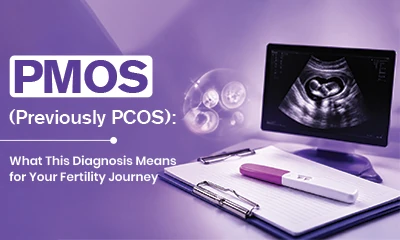
If your doctor recently used the term PMOS (Polyendocrine Metabolic Ovarian Syndrome) instead of the familiar PCOS, you’re not alone in feeling a bit confused. It’s the same condition, just renamed to better capture what’s really going on in the body. At Kiran Infertility Center, Chennai, this is one of the most frequent diagnoses we see in women seeking fertility care, and the good news is that outcomes are consistently positive with the right approach.
PMOS treatment in Chennai
The earlier name, Polycystic Ovary Syndrome, centered attention on the ovarian follicles visible on ultrasound. Over time, researchers recognized this was too narrow a lens: the condition actually reaches far beyond the ovaries, touching hormone balance, metabolism, skin, and mental health. PMOS was adopted globally to reflect this wider, more accurate picture: a whole-body hormonal and metabolic condition, not simply a reproductive one. This broader understanding is why PMOS treatment in Chennai at our center looks at the whole picture, combining hormonal balance, metabolic care, and fertility planning.
What’s Happening Inside the Body
PMOS arises from a combination of interconnected hormonal shifts. Androgen levels — male hormones like testosterone — rise above typical ranges and interfere with normal ovulation. Alongside this, insulin resistance is common: cells stop responding properly to insulin, prompting the body to churn out more of it, which in turn pushes androgen levels even higher.
The result is a self-perpetuating loop — hormonal disruption blocks ovulation, insulin resistance deepens the imbalance, and cycles become unpredictable, making conception timing genuinely difficult.
This is precisely why treating PMOS holistically, rather than chasing individual symptoms, produces far better long-term results.
Common Signs to Watch For
PMOS doesn’t look identical in every woman. Typical indicators include irregular, infrequent, or missed periods; excess facial or body hair (hirsutism); persistent acne or oily skin; scalp hair thinning; weight gain around the midsection; and darkened skin patches around the neck or underarms. Mood shifts — anxiety or low mood — are also common but frequently go unaddressed.
Since symptoms and severity vary so widely, a proper diagnostic workup matters far more than self-diagnosing from a single symptom.
How PMOS Affects Fertility
Irregular or absent ovulation is the core fertility challenge in PMOS — without a predictable egg release each cycle, timing conception becomes a guessing game. This is the single biggest reason women with PMOS come to us for fertility support. The reassuring part: PMOS-related infertility is highly treatable, and most women go on to conceive and have healthy pregnancies with
appropriate care.
Our Approach at Kiran Infertility Center, Chennai
We begin every case with a comprehensive evaluation — clinical assessment, hormone-panel blood work, and ovarian ultrasound — to map your individual hormonal profile before recommending anything.
From there, treatment is tailored to you. Many women benefit first from metabolic and lifestyle interventions — customized nutrition and activity plans that improve insulin sensitivity and often restore cycle regularity on their own. Where needed, hormonal therapies help regulate periods and manage symptoms like hirsutism or acne. If ovulation remains irregular, ovulation-induction medication can help trigger consistent, healthy egg release. For women needing more advanced support, IUI or IVF provide reliable pathways to parenthood. Throughout, we monitor closely and adjust the plan as your body responds.
You’re Not Facing This Alone
A PMOS diagnosis while trying to conceive can feel overwhelming — but it’s a thoroughly researched, well-managed condition, and most women achieve their goal of parenthood with the right plan in place.
If you’re noticing PMOS symptoms or have been trying to conceive without success, the team at Kiran Infertility Center, Chennai is ready to help you understand your body and chart a confident path forward.
FAQs
Is PMOS just a new name for PCOS?
Yes — same condition, renamed to reflect its broader hormonal and metabolic reach beyond the ovaries.
Can women with PMOS conceive naturally?
Many do, especially with lifestyle changes and hormonal treatment that restores regular ovulation. Others may need additional fertility support.
When should I see a fertility specialist about PMOS?
If periods are irregular and you’ve been trying to conceive for 6–12 months without success, it’ time for a specialist evaluation.
Is PMOS treatment only about fertility?
No — it also targets broader metabolic risks like insulin resistance, which matter for long-term health well beyond conception.
Are the ovarian follicles in PMOS dangerous?
Generally not on their own — but they’re a signal of the underlying hormonal imbalance that needs management.

Recent Comments